This is default featured slide 1 title

Go to Blogger edit html and find these sentences.Now replace these sentences with your own descriptions.

This is default featured slide 2 title

Go to Blogger edit html and find these sentences.Now replace these sentences with your own descriptions.

This is default featured slide 3 title

Go to Blogger edit html and find these sentences.Now replace these sentences with your own descriptions.

This is default featured slide 4 title

Go to Blogger edit html and find these sentences.Now replace these sentences with your own descriptions.

This is default featured slide 5 title

Go to Blogger edit html and find these sentences.Now replace these sentences with your own descriptions.

domingo, 19 de abril de 2026

2° AÑO 2026

 WELCOME


 "THERE + BE"

👇


La siguiente tarea lo corregimos este lunes 20/04/26


1) Escribir es singular de estas oraciones:

A) There are some orange pencils in the red box.
B) Are there twenty new english books in the library?
C) There are two black dogs in my school.
D) There are not seven teachers in the library.
E) There are some dictionaries on the desk.
F) Are there five chairs in your classroom?


2) Completar estas oraciones;

A) There..........not..........cold..............in the refrigerator.
B) There...........not.........old.............in the school.
C) There ..........some.............juice.........the jug.
D) ..........there...........dust.......the table?
E) ...........there............six geography books on the shelf?


3) Escribir 2 oraciones con sustantivos contables y 2 oraciones con sustantivos incontables.

A)
B)
C)
D)


My School

There is a big school in my city.
There is a playground next to the building.
There is a library and there is a computer room.

There are many students in the school.
There are ten classrooms and two offices.
There are teachers, students, and a principal.

There is a cafeteria where students eat.
There are tables and chairs in the cafeteria.

There is a gym, but there isn’t a swimming pool.
There are many books, but there aren’t any tablets.


1. Write True or False:

  1. There is a swimming pool. ___
  2. There are ten classrooms. ___
  3. There is a library. ___
  4. There are no students. ___
  5. There is a cafeteria. ___


👇👇👇


******************************************

CLIC PARA VER O DESCARGAR EL RABAJO EVALUATIVO.

👇👇👇

PARA EL CIERRE DEL 1ª TRIMESTRE↴
👇


lunes, 16 de marzo de 2026

1° AÑO 2026

 WELCOME TO ENGLISH CLASS:


VEA, COPIE Y LUEGO PRACTIQUE LOS NÚMEROS CARDINALES EN INGLÉS.


VEA, ESCUCHE Y PRACTIQUE LOS DIAS DE LA SEMANA, MESES DEL AÑO Y LAS ESTACIONES EN INGLÉS:


ACTIVIDADES:


1- Choose the correct word to complete each sentence: amis, or are.

  1. I _________ happy.
  2. She _________ my sister.
  3. They _________ good friends.
  4. He _________ a student.
  5. We _________ excited.
  6. The dog _________ hungry.
  7. You _________ tall.
  8. My name _________ Alex.
  9. Birds _________ in the sky.
  10. This _________ my book.


2- Matching (Subject + Verb)

Draw an arrow to match the subject with the correct form of "to be."


  • I                                  is
  • She                           are
  • They                        am
  • He
  • We
  • It

3- Sentence Creation

Use the words provided to make a correct sentence using "am," "is," or "are."

Example: I / happy Answer: I am happy.


  1. She / tired ______________________________________
  2. They / at home ______________________________________
  3. He / a doctor ______________________________________
  4. We / students ______________________________________
  5. It / cold ______________________________________


4- Ordena las palabras para formar oraciones correctas:

Ejemplo:

teacher / a / is / She → She is a teacher.

  1. happy / are / They

  2. am / I / student / a

  3. He / tall / is

  4. friends / We / are

  5. is / It / cold / today

  6. are / You / late

  7. at / home / am / I

  8. is / dog / The / hungry


5- Completa con AM / IS / ARE

  1. I ___ from Argentina.

  2. She ___ my sister.

  3. They ___ in the park.

  4. We ___ ready.

  5. He ___ a good student.

  6. You ___ very kind.


CLIC PARA VER O DESCARGAR EL TRABAJO EVALUATIVO.

👇👇👇

PARA EL CIERRE DEL 1ª TRIMESTRE↴
👇


viernes, 23 de mayo de 2025

2° AÑO I - II - III 2025

 DESCARGAR EL TRABAJO PRÁCTICO EVALUATIVO DEL PRIMER TRIMESTRE.

CLIC EN ESTA FLECHA

👇


                      THERE + BE = There is / There are.

Se usa para hablar de la existencia de una persona, cosa/s, animal/es, etc.

There is = Singular
There are = Plural


jueves, 22 de mayo de 2025

PRIMER AÑO 2025

VEA Y PRACTIQUE LOS NÚMEEOS:


VEA COPIE Y PRACTIQUE LOS DIAS DE LA SEMANA, LOS MESES DEL AÑO Y LAS ESTACIONES EN INGLÉS.


 PERSONAL PRONOUNS


   I           = yo    1° persona del singular
YOU    = tú   2° persona del singular
HE       = él   3° persona del singular
   SHE     = ella   3° persona del singular
       IT         = este/a   3° persona del singular


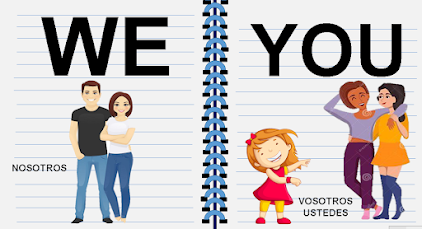
        WE       = nosotros   1° persona del plural
      YOU     = ustedes    2° persona del plural
     THEY    = ellos/as   3° persona del plural


CLICK AQUÍ PARA VER + DE VERB TO BE


VERB TO BE (SER  ESTAR)
( AM  IS  ARE)

I  AM          = yo soy
YOU ARE  =  tú eres
HE  IS        =  él es
SHE IS       = ella es
IT IS           = este/a es

WE ARE       = nosotros somos
YOU ARE    = ustedes son
THEY ARE  = ellos son


INDEFINITE ARTICLES;

A/AN = un / una  (singular)

Estos artículos indefinidos se usan únicamente con los pronombres personales en singular, tales como: 
I - YOU - HE - SHE - IT.

Ambos artículos significan lo mismo, sin embargo, usamos A o AN dependiendo de la palabra que sigue a continuación.

* Usamos el artículo A cuando la palabra que sigue empieza con letra consonante. 

        Ejemplo; A Pen, A Book, A Student, A Desk, etc.


* Usamos el artículo AN cuando la palabra que sigue empieza con letra vocal.

        Ejemplos:  AN Onion, AN Apple, AN Orange, etc.


ADJETIVOS CALIFICATIVOS: son palabras que usamos para describir o calificar al sustantivo de quien estamos hablando.

El adjetivo calificativo en inglés es INVARIABLE en género y número,

Ejemplos:  A GOOD GIRL (femenino singular)
                  A GOOD BOY (masculino singular)

Aquí observamos que el adjetivo GOOD no ha cambiado o no se ha modificado al hablar del género femenino al masculino.

                  FIVE GOOD GIRLS 
                  FIVE GOOD BOYS

Aquí observamos que el adjetivo GOOD no ha cambiado o no se ha modificado al PASAR AL PLURAL. Ahí confirmamos con estos ejemplos que el adjetivo en inglés no cambia o no se modifica nunca.

EL SUSTANTIVO: es de quien hablamos. El sustantivo si se modifica en género y número. Es decir que de singular a plural cambia y de femenino a masculino también cambia. Observamos eso en los ejemplos anteriores: girl a girls y boy a boys.


Existen 3 (tres) formas de oración; afirmativo, negativo e interrogativo.


AFFIRMATIVE FORM
                   
                  SUJETO + VERBO + ARTICULO + ADJETIVO CALIF + SUSTANTIVO.

                          I                  AM                   AN               INTELLIGENT              STUDENT.


NEGATIVE FORM

                  SUJETO + VERBO + NOT + ARTICULO + ADJETIVO CALIF + SUSTANTIVO.

                       I                  AM              NOT               AN               INTELLIGENT          STUDENT.


INTERROGATIVE FORM

VERBO + SUJETO + ARTICULO + ADJETIVO CALIF + SUSTANTIVO.

                   I                AM                 AN               INTELLIGENT              STUDENT?


martes, 11 de mayo de 2021

THERE + BE


THERE IS / THERE ARE

EXERCISES:


1) SELECCIONE EL VERBO CORRESPONDIENTE PARA COMPLETAR LAS ORACIONES:

1- There  a box under the bed.

2- There  a cat on the wardrobe.

3- There  two dogs in the room.

4- There   lots of CDs in the box.

5- There  a computer on the desk.

6- There  a lamp near the bed.

7- There  three jackets in the wardrobe.

8- There  two pillows on the bed.


2) COMPLETAR CON LAS PALABRAS FALTANTES:

1- There.............an...........student...........my...................

2- There...........some.............water.........the jug.

3- There............not............dust............the......................

4- There ...........some............dusters............the desk.

5- There ...........   any.............in the fridge.

6- ............there........red............in the...................?

7- .............there ..........apples............the table?

8- .............there ..........onion ...........the kitchen?

9- What...........there.........the desk?

10- ...........there........intelligent..................in your class?


3) ORDENE LAS SIGUIENTES PALABRAS PARA FORMAR ORACIONES:

1- Is/there/fridge/meat/some/the/in.

2- an/box/pencil/there/orange/is/the/in.

3- any/is/there/not/butter/the/fridge/in.

4- There/a/pet/black/your/in/is/house.

5- my/there/are/smart/class/some/in/students.

6- twenty/there/new/are/teachers/school/my/in/two.

7- small/there/ant/under/your/is/a/chair.

8- beautiful/some/horse/there/country/are/horses/the/in.

9- there/any/is/?/sand/in/house/your.

10- are/there/teddy bears/two/bed/the/on.


sábado, 10 de abril de 2021

COUNTRIES AND NATIONALITIES

 COUNTRIES - NATIONALITIES

👇


CON ESTAS PRESENTACIONES DE PAÍSES Y NACIONALIDADES DE ARRIBA 👆 UD PUEDE PRACTICAR PRONUNCIANDO HASTA APRENDERLO BIEN.


A CONTINUACIÓN UD PRACTICARÁ CON ESTA PRESENTACIÓN PRONUNCIANDO EL PAIS Y SU NACIONALIDAD, CLARO UD PRIMERO DEBE PRACTICAR CON LAS PRIMERAS PRESENTACIONES PARA PODER ASÍ HACER ESTE TRABAJO.
👇👇


QUIERES DESCARGAR LA PRESENTACIÓN? CLIC 👉 AQUI

martes, 23 de marzo de 2021

COLOURS

  COLOURS


lunes, 15 de marzo de 2021

CARDINAL NUMBERS


CARDINAL NUMBERS FROM 1 TO 1.000


Escuche este audio y aprenda a pronunciar los números.

👇


Aquí el video explicativo. Véalo.

🔽


                   Escuche este audio y aprenda a pronunciar los números de 11 al 20.
                                                                            
                                                                          👇


Vea este video y aprenda a pronunciar los números del 11 al 20.

👇


Escuche este audio y aprenda a pronunciar del 21 al 102

👇


Vea este video para entender mejor
👇


viernes, 20 de mayo de 2016

Days of the week


Dias de la semana:


MondayLunes
TuesdayMartes
WednesdayMiércoles
ThursdayJueves
FridayViernes
SaturdaySábado
SundayDomingo


Nota: Se escriben siempre con inicial mayúscula.


Possessive Adjectives


POSSESSIVE ADJECTIVES:

Se utilizan para indicar a quién pertenece el sujeto u objeto de la oración. Van seguidos de un sustantivo (o una cláusula nominal).
Possessive Adjectives
mymi / mis
yourtu / tus
hissu / sus
hersu / sus
itssu / sus
ournuestro/a/os/as
yourvuestro/a/os/as
theirsu / sus

Como se puede observar, son muchos menos que en español, ya que no se diferencian en singular o plural. Por ejemplo:

my
 car
 mi auto

my
 books
 mis libros
Sin embargo, debe prestar atención cuando se refiere a la tercera persona, ya que en castellano se usa "su" en todos los casos, mientras que en inglés varían según la persona.
Nota además que "your" puede referirse al singular (tu) o al plural (vuestro).
my house
your house
his house
her house
its house
our house
your house
their house
I like my job.Me gusta mi trabajo.

Is your brother coming?¿Viene tu hermano?

His car is new.Su auto (de él) es nuevo.

Her house is big.Su casa (de ella) es grande.

Our sons live here.Nuestros hijos viven aquí.

Their children go to school.Sus hijos van a la escuela.
Si se está hablando de una persona y se describe su casa, se usaría his o her, según el sexo de dicha persona.
John lives in New York. His house is very big.
John vive en Nueva York. Su casa es muy grande.

Susan lives in New York. Her house is very big.
Susan vive en Nueva York. Su casa es muy grande.
Pero si se habla de un animal se debe utilizar its.
The cat is under the table. Its name is Bob.
El gato está debajo de la mesa. Su nombre es Bob.

Demonstrative Pronouns


Adjetivos y Pronombres Demostrativos

Escuche el audio y aprenda a pronunciar.


                             👇

THIS - THAT  (singulares)  se usa el verbo "is".

THESE - THOSE  (plurales)  se usa el verbo "are".


THIS 👉 se usa para hablar de una cosa que esta CERCA del emisor. (hablante). Singular.

THAT 👉 se usa para hablar de una cosa que esta DISTANTE del emisor. (hablante). Singular.


THESE 👉 se usa para hablar de cosas que están CERCA del emisor. Plural.

THOSE 👉 se usa para hablar de cosas que están DISTANTE del emisor. Plural


Demonstrative Adjectives
and Pronouns
thiseste / esta
theseestos / estas
thatese / esa
aquel / aquella
thoseesos / esas
aquellos / aquellas
En español, según la distancia a la que nos encontramos, decimos "este" para lo que está cerca del sujeto, "ese" para lo que está más alejado del sujeto y "aquel" para las cosas que están lejos tanto de quien habla como de quien escucha.
En inglés solamente su usa "this" para cosas cercanas y "that" para cosas lejanas.

Cuando se utilizan como adjetivos, deben estar seguidos de un sustantivo.

This
 calculator is very good.
Esta calculadora es muy buena.

 
These cars are very fast.Estos vehículos son muy veloces.
Cuando se utilizan como pronombres, no están seguidos de sustantivos (dado que justamente los pronombres sirven para reemplazarlos).

This
 is a very good calculator.
Esta es una calculadora muy buena.

 
These are very fast cars.Estos son autos muy veloces.


That is a desk.Ese es un escritorio.

 
Those are desks.Esos son escritorios.
Veamos algunos usos especiales:
Hello. This is Paul. (en una conversación teléfonica)Hola. Soy Paul. / Hola. Habla Paul.

This is the story of a boy... (al comenzar un relato)Esta es la historia de un niño...

That was a good film. (para hacer referencia a algo reciente)Ha sido una buena película.

- You are a student, aren't you?
- Tú eres estudiante, ¿verdad?
That's right. (para hacer referencia a lo dicho anteriormente)- Correcto.


Más aclaración con los pronombres demostrativos:


Forma:
Singular (cerca): this /ðɪs/                                Plural (cerca): these /ðiːz/
Singular (lejos): that /ðæt/                                Plural (lejos): those /ðəʊz/

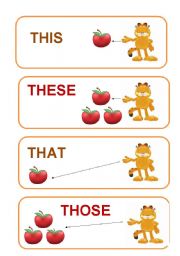
En la sigüiente imagen notamos que en el primer caso, Garfield está cerca de 1 (una) manzana (singular). El segundo caso, Garfield está cerca de 3 (tres) manzanas (plural).
Los ejemplos 3 y 4 ya se refieren a las cosas que están lejos.

Uso:
  • this / these se utilizan para hablar de objetos o personas que están cerca del locutor:
Can I have this piece of cake?  (singular)
What are these shoes doing in the middle of the room?  (plural)
  • that /those se utilizan para hablar de objetos o personas que están lejos del locutor:
Can you pass me that dictionary over there? (singular)
Who are those people on the other side of the street? (plural)
Importante:
a. Recuerde que los siguientes sustantivos son plurales irregulares en inglés, por lo tanto los demostrativos que los acompañan serán these / those:
children, men, women, people
b. Los demostrativos this / that (these /those) pueden ser también pronombres:
This costs more than that.
These are my children.
c. En una conversación telefónica, this se utiliza para identificar a la persona que está llamando, mientras que that se utiliza para identificar a la persona que recibe la llamada:
Hello. This is Jerry. Is that Tom?


Aqui un repaso del verbo TO BE.


Buscar este blog